
How to Plan a Relaxed Dinner at Home Without Hours in the Kitchen
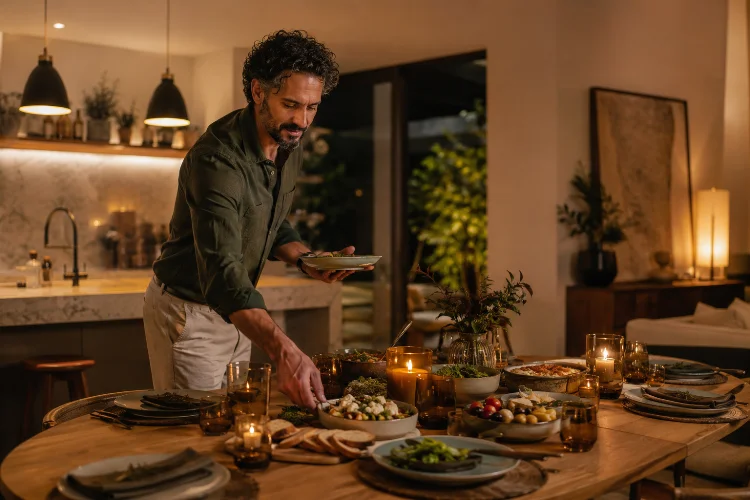
Inviting people over for dinner sounds relaxing until you imagine yourself chopping vegetables while guests are arriving, checking three pans at once, and discovering that dessert still needs another 25 minutes in the oven.
A good dinner at home does not need to work that way.
Learning how to Plan a Relaxed Dinner is mostly about choosing food that works with you rather than against you. Make-ahead dishes, simple starters, family-style serving, and a little preparation earlier in the day can dramatically reduce the amount of cooking required once everyone arrives.
The goal is not restaurant-level perfection. It is good food, a comfortable atmosphere, and enough free time for the person hosting to actually enjoy the evening too.
1. Build the Menu Around One Main Dish
Start with the centre of the meal.
Instead of planning several complicated dishes that all need attention at the same time, choose one main course worth getting excited about. Then keep everything around it simple.
A slow-cooked casserole, baked salmon, roast chicken, lasagne, curry, or tray-baked dish can work particularly well because much of the cooking happens without constant supervision.
Food & Wine’s collection of easy dinner-party recipes similarly focuses on achievable dishes designed to impress without making hosting unnecessarily stressful.
If the main dish is rich, serve a simple salad and good bread. If the main is lighter, add roasted potatoes or vegetables.
You do not need five impressive components competing for attention.
2. Choose Food You Can Prepare Ahead
The easiest way to reduce evening stress is to move some of the work into the afternoon—or even the previous day.
BBC Good Food specifically recommends make-ahead mains as a way to create a less stressful dinner party, with dishes including pies, aubergine parmigiana and other meals that can largely be prepared before guests arrive.
Sauces, dressings, desserts, dips and chopped vegetables can often be prepared early too.
The important idea is to identify what genuinely needs last-minute cooking and what does not.
If dinner starts at 7:30, you should ideally not begin every element at 7:00.
A little preperation earlier gives you a much calmer evening later.
3. Let the Starter Require Almost No Cooking
Your starter does not need to prove anything.
Bread with olive oil, olives, hummus, cheese, cured meats, vegetables with dip, or a simple bruschetta can keep people happy while you finish the main course.
Food & Wine’s advice on casual entertaining similarly recommends light appetisers that guests can nibble on while everyone arrives.
This creates a useful buffer.
If the main course needs another ten minutes, nobody is sitting hungry at an empty table wondering what happened.
Serve the starter somewhere seperate from the main dining table if you want the evening to feel especially relaxed. People can talk, pour drinks, and settle in while you handle the final kitchen tasks.
4. Serve Food Family-Style
Individual plating looks elegant, but it can create unnecessary pressure at home.
Putting food onto large serving dishes and allowing everyone to help themselves is often much easier.
Recent hosting advice from Ina Garten highlighted by Food & Wine recommends platter-style serving as a way to simplify entertaining and create a more casual, communal atmosphere.
A tray of roast chicken, bowl of salad, potatoes, bread, and sauce can look generous without requiring you to arrange six identical restaurant-style plates.
It also means guests can choose their own portions.
Most importantly, you can sit down sooner.
5. Use Shortcuts Without Feeling Guilty
Hosting dinner does not require making every ingredient yourself.
Buy good bread from a bakery. Pick up dessert from somewhere you trust. Use quality ice cream, prepared olives, good cheese, or a favourite dip as part of the meal.
Bon Appétit’s approach to an easy dinner party similarly suggests using smart store-bought items and concentrating effort on one main dish rather than trying to make everything from scratch.
Think about where homemade effort will actually be noticed.
If you love making pasta, make the pasta and buy dessert. If baking is your thing, prepare a great dessert and keep dinner simple.
Nobody awards points for unnecessary kitchen labour.
6. Set the Table Before You Start Cooking
A surprising amount of last-minute stress comes from things that have nothing to do with food.
Finding glasses, clearing the table, looking for serving spoons, or realising you do not have enough chairs becomes much more irritating when something is already cooking.
Set up early.
Recent Food & Wine hosting guidance recommends preparing serving dishes, linens, and other entertaining essentials in advance rather than leaving everything until guests arrive.
You do not need elaborate decorations. A clear table, comfortable lighting, simple plates, and perhaps flowers or candles are enough.
The atmosphere should feel welcoming, not like you are recreating a luxury restuarant.
7. Choose a Dessert That Waits for You
Dessert is one of the easiest courses to prepare in advance.
A cheesecake, chocolate mousse, fruit tart, tiramisu, brownies, or simple chilled dessert can usually sit happily until everyone wants it.
Better still, make dessert something that requires almost no assembly.
Ice cream with berries, good chocolate with coffee, or a bakery cake can be completely appropriate for a casual evening.
The same make-ahead principle appears throughout Serious Eats’ entertaining recipes, including appetisers that can be prepared wholly or partly before the event.
By dessert, nobody wants the host disappearing into the kitchen for another half hour.
8. Remember That the Host Sets the Mood
Guests notice when you are stressed.
If you spend the evening repeatedly apologising because potatoes are five minutes late or the salad does not look perfect, everyone starts focusing on those details too.
Relax.
A slightly imperfect meal served by someone enjoying the occassion is usually more pleasant than technically flawless food delivered by an exhausted host.
Build extra time into your schedule and accept that dinner does not need to begin at exactly 7:30.
People came to eat, talk, laugh, and spend time together.
The food matters, but it is not the entire evening.
Learning to Plan a Relaxed Dinner is about reducing unnecessary work before guests arrive. Choose one strong main dish, prepare what you can ahead, use simple starters, serve family-style, and accept a few smart shortcuts. Set the table early and keep dessert easy.
Most importantly, create a dinner you can enjoy too. Pick a simple menu, invite someone over, and leave perfection off the guest list.