
What Public Art Reveals About a City’s Identity and History
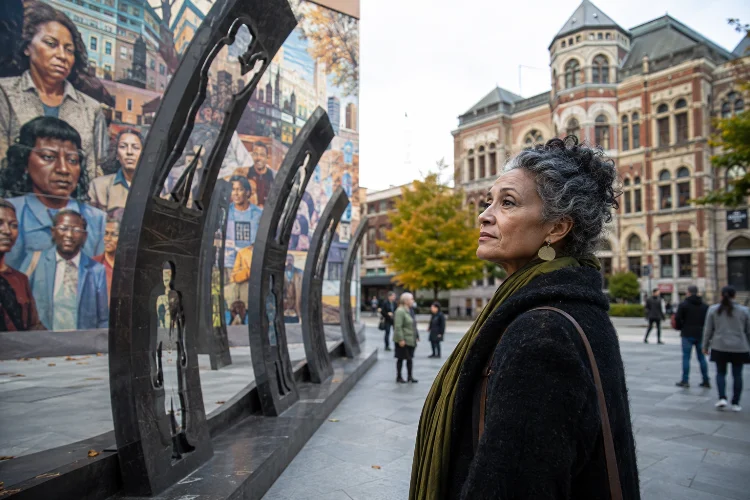
You can learn a surprising amount about a city without entering a museum. Walk through its squares, parks, railway stations and residential streets, and you may encounter statues of political figures, murals celebrating local communities, memorials to difficult events, or contemporary installations that seem to challenge the city’s past.
These works are more than decoration.
Public Art can reveal who a city chooses to remember, what communities value, how neighbourhoods have changed and which stories are currently being debated. Tate broadly defines it as art located in the public realm, whether that space is publicly or privately owned.
For curious travellers, paying attention to this outdoor visual landscape can turn an ordinary walk into another way of reading the city.
1. Monuments Show Who a City Chose to Remember
Statues and monuments often tell you something about the values of the period in which they were created.
Look around an old civic square and you may find military leaders, monarchs, politicians, industrialists or cultural figures standing on pedestals. Their presence raises an interesting question: why was this person considered important enough to occupy permanent public space?
That question can reveal more than the monument itself.
Cities change, and attitudes towards historical figures change with them. A monument that once represented unquestioned civic pride may later become the subject of debate because residents interpret the person’s legacy differently.
This means monuments can tell two stories at once: the history they were designed to commemorate and the changing values of the people living around them today.
2. Murals Can Reveal Stories Missing From Official Monuments
Formal monuments usually require funding, approval and permanent space. Murals can emerge from a very different creative process.
Community organisations, individual artists and local collectives may use walls to represent people or stories that receive less attention in traditional civic spaces.
A mural might celebrate musicians, workers, migrants, activists or neighbourhood personalities. Others address environmental issues, inequality, political events or cultural heritage.
UNESCO notes that public spaces can act as platforms where artists express creativity and raise awareness about societal issues.
This makes street-level artwork particularly interesting when exploring an unfamiliar neigbourhood. The subjects painted on its walls may tell you who residents consider important, even if those names never appear in the city’s main guidebook.
3. Memorials Reveal How Cities Process Difficult History
Not every artwork in public space celebrates achievement.
Memorials may mark wars, disasters, violence, displacement, political repression or the lives of communities that experienced discrimination.
Their design can reveal how a city approaches collective memory.
Some memorials are monumental and highly visible. Others are deliberately quiet, encouraging visitors to stop, read names or reflect on the people behind historical statistics.
Location matters too.
A memorial placed where an event actually happened creates a direct connection between history and the modern city. The surrounding cafés, traffic and daily routines continue, while the artwork reminds people that the same location once witnessed something very different.
Public spaces, UNESCO has argued, reflect both the history and cultural diversity of urban societies.
For travellers, noticing these memorials can add emotional and historical context that ordinary sightseeing sometimes misses.
4. Art Can Express the Identity of a Neighbourhood
Cities rarely have one single identity.
A waterfront district may feel completely different from an old industrial quarter, immigrant neighbourhood, university area or financial centre. Local artwork often reinforces those differences.
Look at the materials, subjects and styles used.
A former manufacturing district may incorporate machinery or industrial materials into sculptures. A coastal community might reference fishing traditions. Areas shaped by migration may feature imagery connected to multiple cultural backgrounds.
Project for Public Spaces describes placemaking as a participatory approach that draws on the ideas and assets of people who actually use a space.
That community connection matters because successful local art does not simply make somewhere look more attractive. It can make the space feel recognisably connected to the people around it.
5. New Art Can Show How a City Is Changing
Older monuments tell you where a city has been. New installations can hint at where it wants to go.
Cities experiencing regeneration often introduce sculptures, murals, cultural venues and redesigned public spaces as part of broader attempts to transform neglected districts.
UNESCO’s work on culture-led urban development highlights the role of culture, creativity and quality public spaces in urban renewal and social interaction.
These projects can create new gathering places and bring attention to previously overlooked areas.
However, it is worth looking beyond the attractive surface.
Ask who commissioned the artwork, whether local residents participated and how the surrounding area is changing. New creative districts can bring investment and activity, but they can also exist alongside debates about development, affordability and who benefits from regeneraton.
That tension is part of the city’s story too.
6. Temporary Art Captures a Particular Moment
Not everything in public space is intended to survive for decades.
Street art may disappear under new paint. Installations can exist for only a festival season. Posters, projections and temporary sculptures may respond to events happening right now.
Tate describes ephemeral art as work whose temporary nature is fundamental to the experience.
Temporary work can therefore function almost like a visual snapshot of the city.
A permanent bronze statue may represent values from a century ago, while a mural painted this month could respond to current politics, climate concerns, community celebrations or local frustrations.
Photographing temporary works—and checking who created them—can help you understand the conversations taking place in a city during your visit.
7. Public Art Can Become Part of a City’s Shared Identity
Some artworks eventually become inseparable from their surroundings.
Residents use them as meeting points. Visitors photograph them. Festivals develop around them, and their images appear on local posters, merchandise or tourism materials.
Project for Public Spaces highlights Providence’s WaterFire as an example of an arts project that has become part of the community’s collective identity while encouraging interaction and a sense of belonging.
This is where art moves beyond decoration.
The artwork helps create the identity of the place itself.
UNESCO similarly reports that initiatives integrating art into public spaces can strengthen cultural identity and civic pride, as demonstrated by its discussion of Public Art Abu Dhabi.
The most interesting question is therefore not always, “Is this artwork famous?”
Ask instead, “What does this mean to the people who live here?”
8. Learn to Look Before Taking the Photograph
It is easy to encounter a mural or statue, take a picture and continue walking.
Spend another minute instead.
Look for a plaque, signature or date. Notice the people represented. Check whether the artwork relates to nearby buildings, industries or historical events.
Search the artist later if the work catches your attention.
You may discover that a colourful mural references a disappearing community, that an abstract sculpture incorporates materials from a demolished factory, or that a seemingly ordinary monument has been the centre of decades of controvercy.
Public spaces often contain layers of cultural meaning that are easy to miss when sightseeing quickly.
The slower you look, the more the city begins to explain itself.
Public Art can turn streets, squares and neighbourhoods into an open-air record of a city’s identity. Monuments preserve memories, murals amplify community stories, memorials confront difficult history and contemporary installations reveal changing values.
Next time you explore a city, look beyond the famous buildings. Slow down, notice what appears in its public spaces, and ask what those works reveal about the people around them.