
Why Slow Living in Modern British Homes Feels More Relevant Than Ever
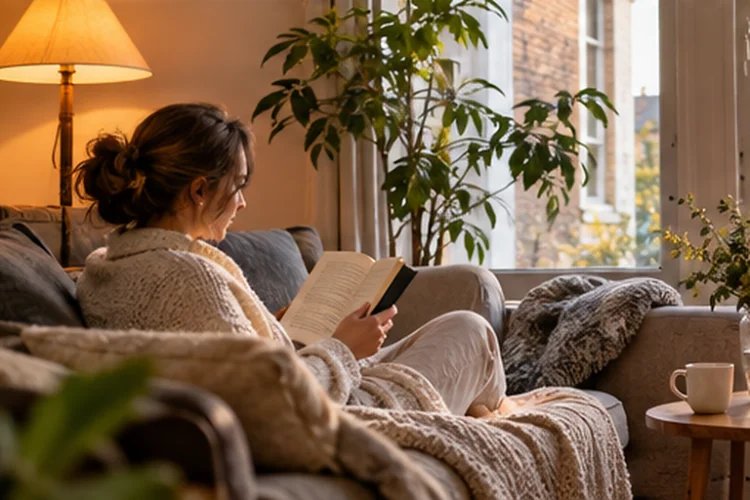
Modern homes are full of things designed to save time. Food arrives at the door, entertainment starts instantly, messages travel in seconds, and work can happen from the dining table without a commute.
Strangely, all that convenience does not always make everyday life feel slower.
That tension helps explain the appeal of slow living in modern British homes. The idea is not about moving to a cottage, giving up technology, or spending entire afternoons baking bread from scratch.
At its simplest, slow living means becoming more deliberate about how time, space, possessions, food, and attention are used.
That can mean eating dinner without a laptop nearby, repairing something instead of immediately replacing it, growing herbs on a windowsill, or creating a clear point when the working day ends.
The trend feels particularly relevant as homes increasingly perform multiple roles. Office for National Statistics data shows that 28% of working adults in Great Britain hybrid worked between January and March 2025.
When home is also the office, slowing down can become less about aesthetics and more about creating boundaries.
1. Slow Living Is Really About Attention
The phrase slow living can sound like it requires an enormous amount of free time.
It does not.
You can have a full-time job, children, a busy commute, or a small flat and still adopt parts of the philosophy. The basic idea is to stop treating every spare minute as something that needs to be optimised.
That might mean drinking morning coffee before checking messages or cooking one proper dinner each week instead of eating while answering emails.
This overlaps with familiar wellbeing principles. NHS guidance encourages actions such as connecting with other people, being physically active, learning new skills, giving to others, and paying attention to the present moment.
Slow living simply brings some of those ideas into ordinary domestic routines.
2. British Homes Are Becoming More Multifunctional
For many people, home is no longer only where the working day ends.
Hybrid working has permanently changed that relationship.
ONS figures show that more than one in four working adults in Great Britain were hybrid workers in early 2025. Among full-time workers, the proportion was 34%.
That makes boundaries inside the home increasingly important.
You may not have a dedicated office. The English Housing Survey found that the average dwelling in England had 96 square metres of usable floor space in 2024, falling to 76 square metres for private rented homes and 66 square metres in the social rented sector.
Slow living in a smaller home therefore does not mean creating several beautifully separated rooms.
It might simply mean packing the laptop away at 5:30 p.m., clearing the kitchen table, changing the lighting, and allowing the same physical space to become a home again.
Small rituals can create psychological separation even when walls cannot.
3. The Appeal of Owning Less Is Growing
Slow homes are often associated with minimalism, but the goal does not need to be owning almost nothing.
A more practical version is simply buying less casually.
Before replacing a chair, lamp, coat, or kitchen item, you might ask whether the existing one can be repaired, reused, altered, or simply kept.
This fits increasingly well with broader ideas around circular living.
WRAP argues for economic models built around reuse, repair, resale, and keeping products in circulation for longer. Its research has also found strong consumer interest in repair services.
There is a domestic benefit too.
Fewer unnecessary possessions mean fewer things to organise, clean, store, and eventually throw away.
A slow home does not have to look empty. It simply contains more objects that were chosen deliberatly rather than accumulated automatically.
4. Gardening Fits Naturally Into the Slow-Living Mindset
Few activities refuse to be rushed as effectively as gardening.
You can buy faster broadband. You cannot convince tomatoes to ripen because your calendar is busy.
That makes gardening an almost perfect slow-living activity.
The RHS’s 2025 research suggests gardening remains deeply embedded in British life. It estimated that around 41 million people in the UK garden, while domestic gardeners commonly reported benefits to mental health, physical health, and social wellbeing.
You do not need a large garden either.
A balcony, window box, herb pot, shared courtyard, allotment, or community garden can provide the same basic rhythm of planting, waiting, observing, and maintaining.
Community gardening is also significant. RHS research estimated that 2.5 million people had gardened within their communities during the previous three years.
Growing something reconnects home life with seasons rather than just schedules.
5. Nature Is Becoming Part of the Indoor Home Too
Not every British household has easy access to private outdoor space.
The English Housing Survey found that although 82% of dwellings in England had a private plot in 2024, the figure was only 60% in London. London homes were much more likely than those elsewhere to rely on shared outdoor space.
That does not make nature irrelevant to slow living.
Houseplants, herbs, window boxes, flowers, natural light, and views of trees can all bring some sense of the outdoors into the home.
The Mental Health Foundation notes that nature can include urban trees, gardens, indoor plants, and even window boxes. Its research found that 70% of UK adults agreed that being close to nature improves their mood, while 49% said it helps them cope with stress.
The point is not to turn the living room into a jungle.
One plant that you actually notice and care for can fit the philosophy better than twenty bought for decoration.
6. Slow Living Makes Ordinary Domestic Activities Matter Again
A lot of modern convenience is designed to remove household tasks.
Sometimes that is extremely useful.
Slow living simply asks whether every activity needs to disappear.
Cooking, gardening, making coffee, repairing clothes, arranging flowers, reading, or sitting down for dinner can become enjoyable rituals when they are not treated purely as chores.
Consider cooking.
A weeknight meal does not have to become an elaborate three-hour project. Preparing something simple without simultaneously watching emails or scrolling through social media can already change how the evening feels.
The same applies to tea.
Making it, sitting down, and actually drinking it while still hot is hardly revolutionary British lifestyle advice.
Yet on a chaotic day, that ten-minute ritual can create a genuine pause.
7. A Slower Home Does Not Have to Be an Expensive Home
Social media sometimes makes slow living look surprisingly costly.
There are handcrafted ceramics, designer linen, organic candles, expensive wooden furniture, and perfectly organised pantries.
None of these is required.
In fact, constantly purchasing things to achieve a “slow” aesthetic rather misses the point.
WRAP estimates that UK homes contain hundreds of millions of unused home-textile items, including bedding, towels, cushions, and other household fabrics. Around 21% of the home textiles examined in its research had not been used during the previous year.
Using what you already own can therefore be more consistent with slow living than buying an entirely new collection of supposedly timeless products.
Rearrange furniture. Repair a chair. Bring an old blanket back into use. Buy second-hand when something is genuinely needed.
A calm home is not automatically a new home.
8. Digital Boundaries Are Becoming Part of Domestic Design
One of the hardest things to slow down inside a modern home is not the furniture.
It is the phone.
Work messages, social media, streaming, news, shopping, and entertainment all compete for attention through the same device.
This makes digital boundaries an increasingly important part of slow domestic life.
You might keep phones away from the dining table, charge them outside the bedroom, or create one chair that is used for reading rather than scrolling.
The goal is not complete digital rejection.
Technology makes modern homes easier, safer, and more connected in countless ways.
Slow living simply means deciding when technology deserves your attention rather than giving it constant access by default.
Even one screen-free part of the evening can make home life feel more seperate from the speed of the outside world.
9. Slow Living Works Best When It Is Imperfect
There is a contradiction in trying too hard to live slowly.
If you create a strict morning routine, seasonal meal plan, minimalist cleaning schedule, daily journaling requirement, gardening timetable, and digital-detox checklist, you have simply created another productivity system.
Slow living should reduce pressure.
Some evenings will involve homemade soup and a book. Others will involve takeaway food and three episodes of television.
Both are fine.
The useful question is not whether your home looks slow.
It is whether your routines give you enough time to notice and enjoy the life happening inside it.
A realistic approach may involve just a few consistant habits: closing work properly, eating together when possible, repairing before replacing, spending time outdoors, and occasionally doing one thing without simultaneously doing three others.
That is far more sustainable than trying to perform a perfect lifestyle.
The appeal of slow living in modern British homes is not really about nostalgia or escaping contemporary life. It is about having slightly more control over its pace.
Hybrid work, digital connectivity, smaller urban homes, convenience culture, and constant consumption can easily blur the boundaries between working, resting, buying, and living. Slow living responds by making everyday choices more intentional.
That might mean growing herbs, cooking without screens, keeping possessions longer, creating a clear end to the working day, or simply sitting down for tea.
You do not need to redesign your entire home.
Choose one routine that currently feels rushed and slow it down slightly this week. A calmer home often begins not with buying something new, but with paying more attention to what is already there.